

Macro tracking is a practical, flexible way to hit fat-loss or muscle-gain goals without cutting out entire food groups. Start with a rough calorie target, lock in a protein floor of around 1.6 to 2.2 grams per kilogram of bodyweight, then let carbs and fat fill the rest. A sensible starter split for fat loss balances protein, fat, and carbs within typical public-health recommended ranges. You do not need daily precision. Staying within about 5 grams per macro is close enough for real progress.
TL;DR:
- Most beginners should focus on hitting their protein minimum of 1.6 to 2.2 grams per kilogram of body weight daily to preserve muscle during dieting.
- Setting a calorie deficit of 10 to 20 percent for fat loss or a 5 to 15 percent surplus for muscle gain is more sustainable than aggressive cuts or gains.
- Locking in protein and fat targets first allows carbs to fill the remaining calories, making macro tracking simpler and more effective.
- Tracking food with a digital scale, pre-logging meals, and estimating restaurant intake can help maintain consistency without obsessing over precision.
- Adjusting carbohydrate intake around training days and prioritizing whole foods support better performance and balanced micronutrient intake.
Table of Contents
- What are macros and why do they matter for beginners?
- How do you calculate your daily calorie target?
- How do you convert macro percentages into grams?
- How do you track macros without it taking over your life?
- What are good beginner macro splits and meal ideas?
- What mistakes do beginners make with macro tracking?
- Why do evidence-based floors make macro tracking work for beginners?
- Does meal timing or food quality matter once macros are set?
- How do you track macros when eating out or socialising?
- What about micronutrients and hydration on a macro diet?
- How should strength training and cardio shape your macros?
- Why simple rules beat perfect numbers
- Ready to put your macros into practice?
- Sources
What are macros and why do they matter for beginners?
Macronutrients are the three nutrients that supply calories: protein and carbohydrate each provide 4 calories per gram, while fat provides 9. Every meal you eat is built from some combination of these three, and how you split them between goals changes how your body responds even at the same total calorie intake.
Protein does the heavy lifting for anyone dieting. It repairs muscle tissue, keeps you fuller for longer, and protects lean mass while you're eating below maintenance. Of the three macros, protein is the one worth getting right first. Skimp on it and you'll likely lose muscle alongside fat.
Carbohydrates fuel your training. They top up glycogen stores in your muscles, which is what lets you push through a heavy set or a hard interval session. Beginners often cut carbs aggressively because it feels like the "diet" thing to do, but if you train regularly, dropping them too far tends to backfire on performance and energy.
Fat supports hormone production, helps absorb fat-soluble vitamins like A, D, E and K, and adds satisfaction to meals. It's also the macro people most underestimate on a plate, because cooking oils, sauces, and nuts pack calories fast.
A few things worth remembering as you start:
- Protein and carbs provide about 4 kcal per gram
- Fat provides about 9 kcal per gram
- Total calorie deficit, rather than macro split alone, drives weight loss, according to nutrition guidance from Lebensmittelverband
- Macro balance mainly shapes body composition and how you perform in training, not whether you lose weight at all
How do you calculate your daily calorie target?
Before you touch a single macro number, you need a calorie target. This is where most beginners either skip a step or overcomplicate it.
Your Total Daily Energy Expenditure (TDEE) is the number of calories your body burns in a typical day, including movement, digestion, and exercise. The Mifflin-St Jeor equation is the most widely used formula for estimating this, and it's the basis of most reputable online TDEE calculators. Plug in your age, height, weight, and activity level, and you'll get a reasonable maintenance estimate.
Once you have that number, here's how to set your goal:
- For fat loss, cut your maintenance calories by roughly 10 to 20%. A moderate deficit is easier to sustain and protects more muscle than an aggressive one.
- For muscle gain, add roughly 5 to 15% above maintenance. A smaller surplus limits fat gain while still giving your body the fuel to build tissue.
- For maintenance, simply eat at your estimated TDEE and adjust based on how your weight trends over a few weeks.
- Track your weight and energy levels for three to four weeks before making any big changes. Weight fluctuates daily from water and food volume, so short-term swings mean very little.
Resist the urge to slash calories hard in week one. A conservative approach that you can actually stick to beats a dramatic cut that has you burnt out and bingeing by day ten.
How do you convert macro percentages into grams?
This is the part that trips up most newcomers, but the sequence is straightforward once you see it written out.
Work through it in this order:
- Set your total daily calories (from the TDEE step above).
- Lock in your protein floor first. Aim for 1.6 to 2.2 grams per kilogram of bodyweight, a range consistently used by coaches and trainers who track macros as a baseline for preserving muscle during a deficit.
- Set a fat minimum. Around 0.5 to 0.8 grams per kilogram covers hormonal and vitamin needs without eating into your carb allowance unnecessarily.
- Fill the remainder with carbohydrates. Whatever calories are left after protein and fat go to carbs, which fuel training and daily energy.
Statistic Callout: A protein intake within a consistent range recommended for preserving lean mass during a calorie deficit is advised by experienced macro tracking guidance such as Calorie-Counters.
Here's how that plays out with real numbers.
Example 1: 70 kg person, fat loss. Say TDEE comes out at 2,200 calories, and you set a 15% deficit, landing at 1,870 calories. Protein at 2 g/kg is 140 g (560 calories). Fat around recommended minimum levels appropriate for hormone and vitamin needs, which can vary depending on individual factors. That leaves 806 calories for carbs, which converts to roughly 200 g.
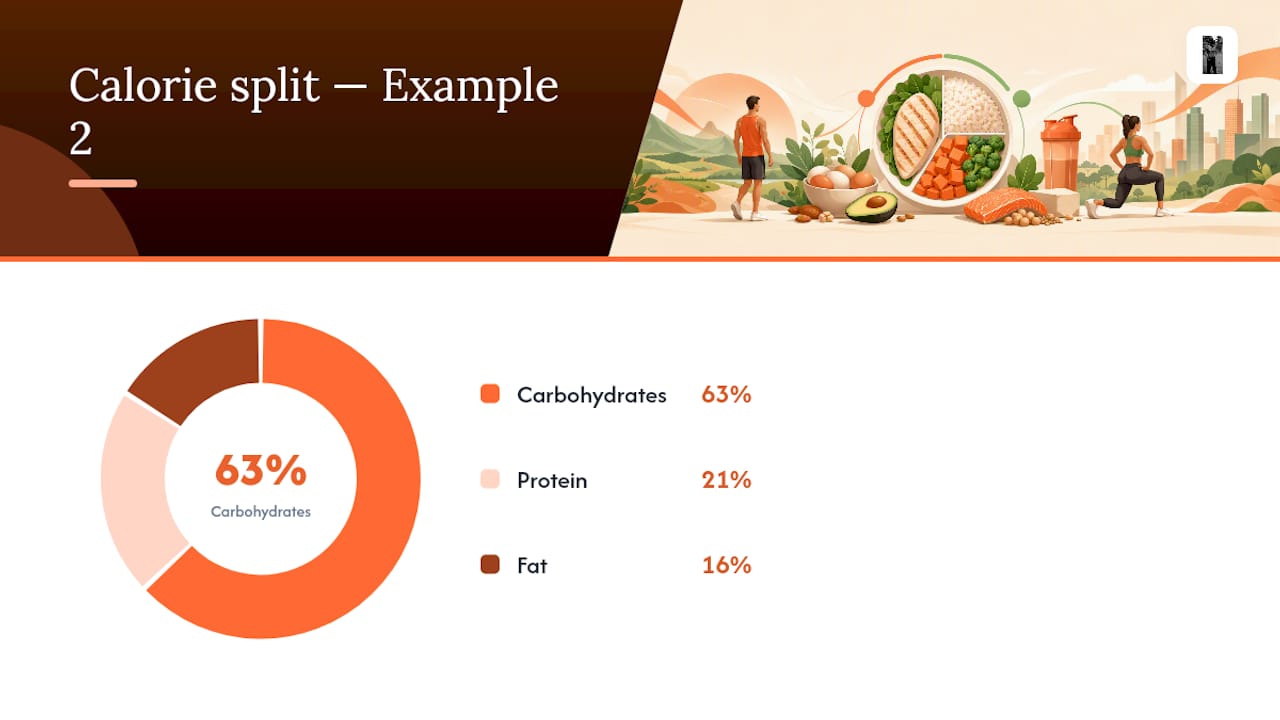
Example 2: 80 kg person, muscle gain. TDEE is 2,800 calories, and a 10% surplus puts the target at 3,080 calories. Protein at 2 g/kg is 160 g (640 calories). Fat at 0.7 g/kg is 56 g (504 calories). Carbs fill the remaining 1,936 calories, which is about 484 g.
Notice the pattern: protein and fat get locked in as gram targets first, based on bodyweight, and carbs simply absorb whatever calories are left.
How do you track macros without it taking over your life?
Counting macros sounds tedious until you build a system. Most of the friction disappears once you settle into a routine.
A digital food scale is worth more than any app you'll download. Eyeballing portions, especially oils, nut butters, and cheese, is where most people quietly blow their fat target without realising it, since dense fats like oils are notoriously easy to undercount when measured by eye. Pair the scale with a tracking app that has a barcode scanner. Most mainstream nutrition apps let you scan packaged food and log it in seconds, which saves you from manually searching and guessing at portion sizes.
A simple daily workflow looks like this:
- Pre-log one meal the night before, usually breakfast or lunch, so you start the day with a plan rather than a blank slate.
- Weigh protein sources and any added oils or fats raw or cooked, whichever matches how you logged the food in your app.
- Save recurring meals so you're not re-entering the same breakfast five times a week.
- Log food as you eat it, not at the end of the day, when memory gets fuzzy and portions get rounded down.
For restaurant meals or shared dishes, estimate generously rather than guessing low. If you genuinely can't weigh something, use the closest matching entry in your app and round up slightly. It's better to overestimate a burger than assume it's lean and end up short on your numbers for the week.
Pro Tip: Log your coffee, cooking oil, and sauces every single day, even the "small" ones. These are the items beginners forget most often, and they add up to hundreds of hidden calories a week.
Counting macros this way, rather than just watching total calories, tends to improve hunger control and body composition over time, according to Healthline's breakdown of macro tracking.
What are good beginner macro splits and meal ideas?
You don't need a perfect split on day one. Pick one of these three starting points based on your goal, then adjust after a few weeks of real data.
Fat-loss starter (based on 1,870 calories): 30% protein / 30% fat / 40% carbs, which works out to roughly 140 g protein, 62 g fat, 187 g carbs.
Balanced/maintenance: 30% protein / 25% fat / 45% carbs, sitting comfortably within the broader public-health ranges for macronutrient distribution of 10 to 35% protein, 20 to 35% fat, and 45 to 65% carbs.
Muscle-gain starter (based on 3,080 calories): 25% protein / 25% fat / 50% carbs, giving you roughly 160 g protein, 68 g fat, 385 g carbs, with the extra carbohydrate supporting harder training sessions.
Quick meal and snack ideas that make hitting these numbers easier:
- Greek yoghurt with berries and a scoop of protein powder, for a high-protein, moderate-carb breakfast
- Chicken breast, rice, and roasted vegetables with a small amount of olive oil, a classic macro-friendly plate
- Cottage cheese and rice crackers as a low-effort, protein-heavy snack
- Salmon, sweet potato, and steamed greens for a fat-loss dinner with quality fats built in
- A protein shake with a banana for a fast post-training top-up
- Swap regular mince for extra-lean mince, or use fat-free yoghurt instead of full-fat, to trim fat without losing protein
Sample day (fat-loss starter): breakfast is Greek yoghurt with berries, lunch is chicken, rice and vegetables, an afternoon snack is cottage cheese with crackers, and dinner is salmon with sweet potato and greens. Spread across the day, this lands close to the 140/62/187 target without any single meal feeling restrictive.
What mistakes do beginners make with macro tracking?
Most stalled progress traces back to one of a handful of repeat offenders.
- Underhitting the protein floor. It's the easiest macro to fall short on because protein-dense food often costs more effort to prepare than carbs or fat.
- Underestimating cooking oils and fats. A tablespoon of olive oil is around 120 calories, and it disappears fast in a pan without being weighed.
- Not adjusting for training days. Heavy lifting or long cardio sessions burn more, and eating the same on rest days and training days can quietly undo a deficit or blunt a surplus.
- Chasing perfect numbers instead of consistency. BBC Good Food has flagged the risk of macro tracking tipping into rigidity, which can crowd out attention to micronutrients or, in some cases, feed disordered patterns around food.
If you notice anxiety around food, rigid all-or-nothing thinking, or a medical condition complicating things, that's a signal to bring in a doctor or registered dietitian rather than push through alone.
Why do evidence-based floors make macro tracking work for beginners?
The method in this guide isn't arbitrary. Calories-first sequencing exists because total energy balance remains the main driver of weight change, with macro split shaping composition and performance on top of that. The protein floor of 1.6 to 2.2 g/kg and fat minimum of roughly 0.5 to 0.8 g/kg aren't guesswork either. They're the ranges experienced coaches consistently apply to protect muscle and hormonal health while dieting.
Getting the sequence right, calories, then protein, then fat, then carbs, matters more than obsessing over exact percentages. Beginners who follow that order tend to stay consistent longer than those chasing a "perfect" ratio from day one.
Fitprosperfitness builds its coaching programmes around exactly this order of operations. Structured plans take the guesswork out of the maths, and monthly coaching adds a layer of tailoring that a generic app or spreadsheet can't offer, catching issues like undereating protein or overtraining before they stall your progress for weeks.
Does meal timing or food quality matter once macros are set?
Hitting your macro numbers is the priority, but what and when you eat still shapes how you feel and perform. Meal timing matters less than most beginners assume for pure fat loss or muscle gain over a week, but it matters more for training performance and hunger management day to day.
Eating a carb and protein-rich meal within a couple of hours before a hard training session tends to improve output and recovery, since your muscles are drawing on more readily available glycogen. Spreading protein across three or four meals rather than loading it all into dinner also seems to support muscle repair better than one large protein hit, simply because your body can only use so much at once.
Food quality matters even when the macro numbers line up. Two people can hit identical protein, fat, and carb targets, one from grilled chicken, vegetables, and olive oil, the other from processed meat and refined snacks, and end up in very different places for fibre, micronutrients, and how full they feel. Whole, minimally processed foods tend to be more filling per calorie, which makes staying within your targets considerably easier without constant hunger.
This is also where training-day carbs matter. If you lift weights or do endurance work regularly, keeping carbohydrate intake above roughly 100 to 150 g per day helps maintain the glycogen stores your training performance depends on. Chronically low carbs paired with hard training is a common reason beginners feel flat in the gym despite hitting their calorie targets.
How do you track macros when eating out or socialising?
Restaurants and social meals are where most beginners either panic or abandon tracking altogether. Neither is necessary.
Before you go, check if the restaurant publishes nutrition information. Many chains do, and even an approximate figure beats a blind guess. If nothing's available, look for the closest match in your tracking app. A grilled chicken salad from an unlisted restaurant is close enough to a similar logged item elsewhere; you don't need exact precision, just a reasonable estimate.
Order with your macros loosely in mind rather than obsessing over the menu. Protein-forward mains, dressings and sauces on the side, and one indulgent element rather than three usually gets you close enough. If you know a big meal is coming, you can shift calories from earlier in the day to leave more room, though this only works well if you plan it rather than skip meals reactively out of guilt.

Social situations, birthdays, holidays, dinners with friends, are not the moments to weigh food on a portable scale at the table. Log your best estimate afterwards, or simply treat the day as an untracked one and move on. One meal outside your targets changes almost nothing over a week when the other six days are on point. The bigger risk is the all-or-nothing thinking that turns one off-plan dinner into an entire off-plan weekend.
Alcohol deserves a mention here too. It doesn't fit neatly into the protein, carb, or fat model since it carries its own calories (7 per gram), so budget for it separately rather than trying to force it into a macro category.
What about micronutrients and hydration on a macro diet?
Macros get all the attention, but they're only part of the nutritional picture. It's entirely possible to hit your protein, fat, and carb targets every day while still falling short on vitamins, minerals, and fibre, particularly if your food choices lean heavily on protein shakes, white rice, and lean meat with little variety.
Vegetables, fruit, and whole grains do double duty: they help fill your carbohydrate allowance while delivering fibre, potassium, vitamin C, and a range of micronutrients that processed carb sources don't provide. Aiming for colour and variety across your carb choices, rather than defaulting to the same rice and oats every day, closes most of the gap without any extra tracking effort.
Hydration matters more than beginners expect, especially anyone in a calorie deficit or training regularly. Water supports digestion, helps regulate appetite, and plays a role in how efficiently your body uses the fuel from your macros. Thirst is often mistaken for hunger, which can quietly push people over their targets without realising why.
There's no need to track water or micronutrients with the same rigour as macros. A rough daily habit, a big glass with each meal, a varied plate of vegetables and fruit, and a multivitamin if your diet is genuinely restrictive, covers most of what matters without adding another layer of obsessive counting to your day.
How should strength training and cardio shape your macros?
The type of exercise you do should influence how you allocate your macros, not just how many total calories you eat.
Strength training relies heavily on glycogen for fuel during sets, which is why lifters generally do better keeping carbohydrates on the higher end of their range, particularly around training days. Protein needs are also non-negotiable here since resistance training is the primary driver of muscle repair and growth, making that 1.6 to 2.2 g/kg floor especially important for anyone lifting regularly.
Cardio-dominant training, running, cycling, and similar steady-state work, burns through calories differently and can tolerate a slightly wider range of carb and fat intake without the same performance penalty. Longer endurance sessions do increase your calorie needs, though, so your TDEE calculation should reflect that activity honestly rather than underestimating it.
A practical approach many beginners use is shifting a modest amount of carbohydrate toward training days and slightly reducing it on rest days, while keeping protein and fat relatively stable throughout the week. This isn't a strict requirement, but it can improve how you feel during hard sessions without changing your total weekly calories. If you mix both strength and cardio, prioritise carbs around your heaviest lifting days first, since that's where glycogen depletion tends to hit hardest.
Why simple rules beat perfect numbers
The biggest misconception about macro dieting is that it's a precision sport. It isn't. The research and practical guidance behind this method consistently point the same way: get the sequence right, calories, protein floor, fat minimum, carbs to fill, and the exact percentages matter far less than people assume.
Conventional advice often obsesses over the "ideal" ratio for fat loss or muscle gain, as if there's one magic split everyone should chase. There isn't. What separates people who succeed with macro tracking from those who quit after three weeks is consistency, not accuracy to the gram. Beginners who allow themselves that ±5 g flexibility stick with tracking longer, and sticking with it is what actually drives results.
If you take one thing from this guide, prioritise protein first, every single day, before worrying about anything else. Everything else, including your carb and fat split, can flex around your training and your hunger without derailing progress. Perfectionism is the more common failure mode here, not carelessness.
— prosper
Ready to put your macros into practice?
Reading about macro splits is one thing. Having someone build yours around your actual training schedule, food preferences, and goals is another. Fitprosperfitness sets up personalised, macro-aware meal plans alongside structured training programmes, so you're not left guessing whether your split actually fits your lifestyle or just looks right on paper.

In your first month, expect a calorie and macro target built from your own numbers, a training plan matched to your goal, and monthly coaching check-ins to adjust things as your body responds. That's the piece most beginners miss on their own: nobody reviewing progress and correcting course before a stall turns into weeks of frustration. If you want your macro numbers turned into an actual eating and training plan rather than a spreadsheet you abandon in a fortnight, explore FitProsper's coaching programmes and get your plan built around your goal.