
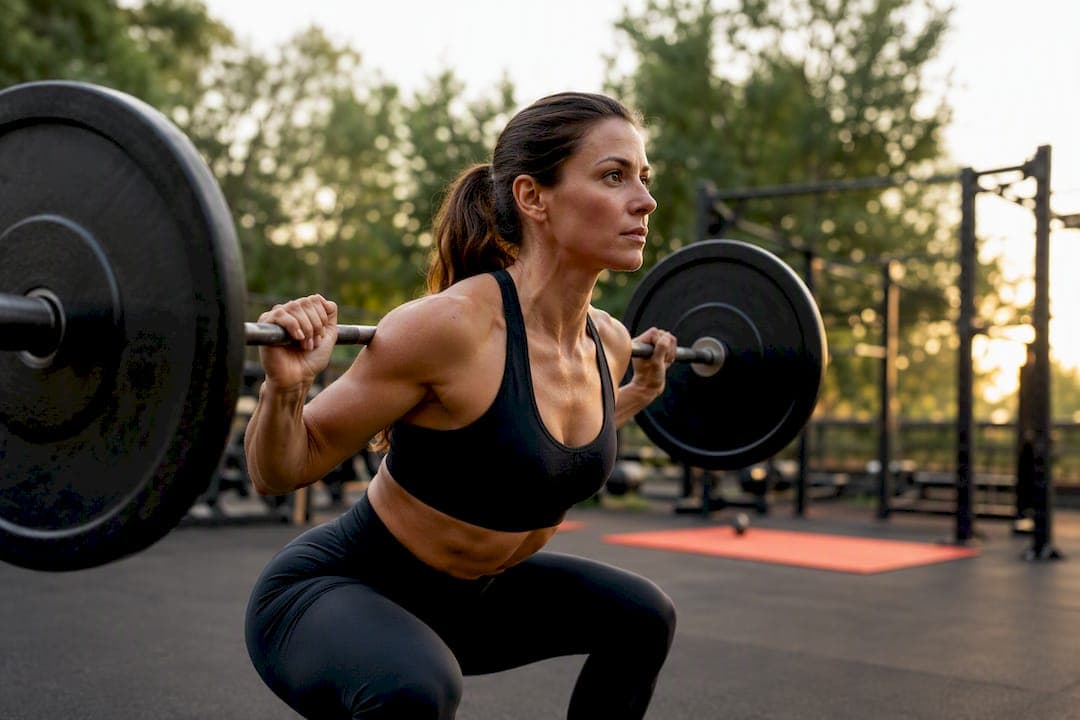
Most women should start with a few strength sessions each week, built around compound lifts like squats, hinges, presses and pulls, adding a little more weight or a rep whenever a set feels manageable. Lifting will not make you "bulky", protein intake and progressive overload matter far more than any specific exercise, and almost every woman, at any age, can start this week.
TL;DR:
- Women can start strength training with two to three sessions weekly, focusing on compound lifts like squats, presses, and pulls, with progressive overload.
- Resistance training benefits bone density, especially after 50, by decreasing osteoporosis risk, and improves posture, metabolism, and daily functional strength.
- Building muscle through weightlifting will not cause bulk but will enhance muscle tone and body composition, thanks to hormonal differences and controlled training.
- Training twice a week per muscle group with 10 to 20 sets is optimal for hypertrophy, with beginners requiring less volume and higher-trained women handling more frequent sessions.
- Consistent, progressive, moderate intensity training with a written plan and proper recovery prevents injuries, accelerates strength gains, and builds lasting psychological confidence.
Table of Contents
- Why women strength training pays off for life, not just for looks
- Will lifting weights make you bulky?
- What actually counts as strength training?
- How often should you strength train each week?
- Sample women's strength training programmes to start this week
- Nutrition and supplements that actually move the needle
- Recovery, deloading and avoiding injury setbacks
- How to plan progress over months, not just weeks
- How hormones shape the way women build strength
- Common obstacles women face in the gym, and how to get past them
- The psychological shift that comes with getting stronger
- What the research actually tells us about getting stronger
- A structured, coached path if you'd rather not build the plan alone
- Sources
Why women strength training pays off for life, not just for looks
The case for lifting weights has moved well past aesthetics. A systematic review covering twelve randomised controlled trials and 1,365 women found that even brief, low-intensity strength programmes produced measurable strength gains and reduced musculoskeletal pain. That is a low bar to clear for a high return.
Bone density is the one benefit almost nobody talks about until it's too late. Resistance training places mechanical stress on bone tissue, which is exactly the stimulus that slows the density loss linked to osteoporosis, particularly relevant once oestrogen starts declining around perimenopause. Women over 50 benefit strongly from lifting, with research supporting resistance training as a recommended intervention for older adults to protect bone and preserve lean muscle mass.
Strength training's return on investment: researchers behind that same review found benefits appeared even in workplace programmes using light equipment and short sessions, meaning the effect isn't reserved for people with hours to spend in a gym.
Beyond bone health, the day-to-day gains stack up fast:
- Better posture and reduced back pain from stronger stabilising muscles around the spine and hips.
- Improved insulin sensitivity and metabolic health, since muscle tissue is metabolically active even at rest.
- Easier daily tasks, from carrying shopping to climbing stairs, as functional strength improves.
- Reduced injury risk during other sports or activities, because stronger tendons and connective tissue handle load better.
Public health bodies now bake this into general activity advice rather than treating it as a niche pursuit. The CDC's physical activity guidelines for adults recommend muscle-strengthening work on two or more days a week, alongside aerobic activity, as a baseline for health, not an optional extra for athletes.
Will lifting weights make you bulky?
No, and this myth deserves to be retired for good. Significant muscle bulk requires a specific combination of high testosterone, aggressive calorie surplus and years of dedicated training volume. Women typically carry a fraction of the testosterone men do, and expert commentary on female hypertrophy confirms that large, rapid muscle growth is unlikely without extreme, deliberate protocols most people never come close to following.
What actually happens when women lift heavier weights consistently is a change in body composition, not a jump in size. Muscle takes up less space than fat per pound, so many women get leaner and more defined while the scale barely moves.
Strength training improved body composition and function in study populations without producing the large, male-typical muscle mass that many women fear. The outcome was tone and capability, not bulk.
A few more myths worth dismantling:
- "Light weights and high reps are the only safe option." Lifting near your effort limit with heavier loads and lower reps is just as safe when form is sound, and it builds strength faster.
- "If I'm not sore, it didn't work." Soreness reflects unfamiliar movement, not training quality. Plenty of highly effective sessions leave you barely stiff the next day.
- "Cardio is enough for a strong body." Cardio conditions your heart and lungs; it does very little to build the muscle that protects your joints and bones long-term.
Soreness fades as your body adapts, but strength, bone density and metabolic health keep compounding for as long as you keep training.
What actually counts as strength training?
Strength training means any exercise that forces your muscles to work against resistance, whether that resistance comes from a barbell, a resistance band, a machine, or simply your own bodyweight. The real distinction that matters is between compound and accessory lifts.
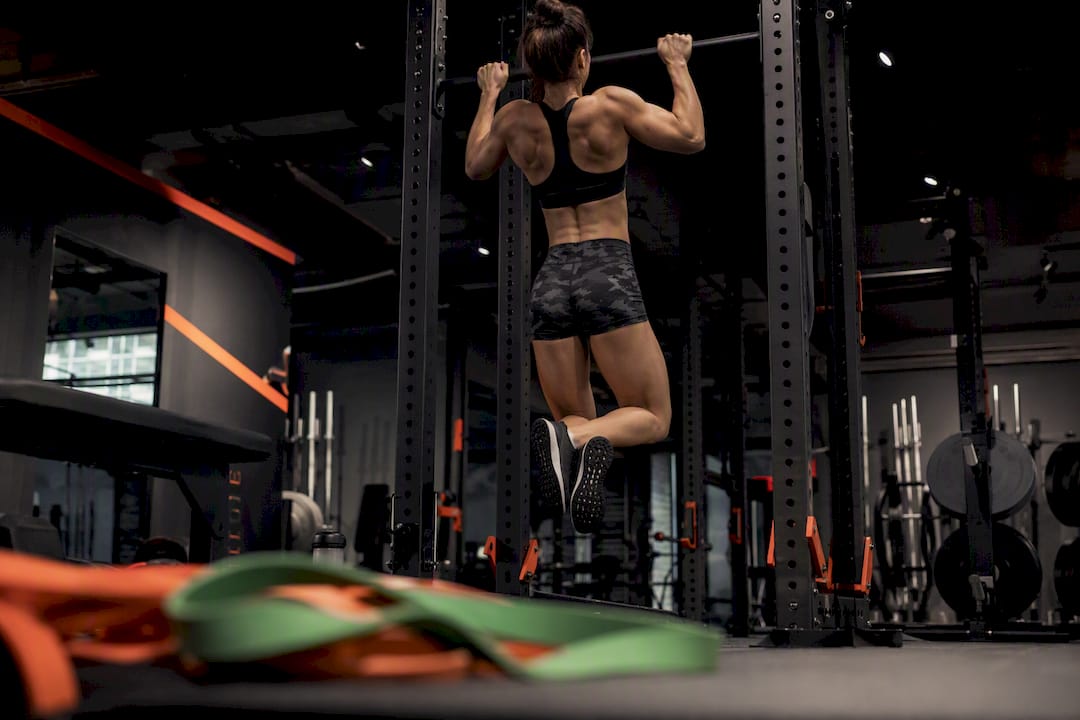
Compound lifts work multiple joints and muscle groups at once. Think squats, deadlifts, bench presses, overhead presses, rows and pull-ups. These give you the most return per minute in the gym and should form the backbone of any programme.
Accessory lifts isolate a single muscle or joint, like bicep curls, lateral raises, or leg extensions. They're useful for addressing specific weak points but shouldn't replace compound work.
Progress comes down to one core principle: progressive overload. Your muscles adapt to whatever demand you place on them, so if the demand never increases, neither does your strength. That doesn't mean adding weight every single session. Overload can come from:
- Adding load (more weight on the bar).
- Adding reps at the same weight.
- Adding a set to your session.
- Improving your range of motion or slowing the tempo.
- Reducing rest between sets to increase density.
Training "close to failure" simply means working within a few reps of your technical limit, often described using RPE (Rate of Perceived Exertion) on a scale of 1 to 10. Most productive working sets sit around RPE 7 to 9, hard, but with a rep or two left in reserve.
On frequency and volume, the evidence is fairly settled. A 2025 review of resistance training frequency and hypertrophy found that training each major muscle group roughly twice a week, accumulating somewhere between 10 and 20 working sets weekly per muscle group, produces reliable hypertrophy in trained individuals. Below that volume, growth stalls; well above it, returns diminish and recovery suffers.
How often should you strength train each week?
Frequency depends far more on training age than chronological age. A complete beginner needs less volume to grow than someone who has been lifting for three years, because untrained muscle responds to almost any consistent stimulus.
- Beginners (0 to 6 months of consistent training): Two to three sessions a week is plenty. Full-body sessions work best here because you're hitting every major muscle group with each visit, reinforcing movement patterns while your nervous system adapts.
- Intermediate lifters (6 months to 2 years): Three to five sessions a week, often split into upper/lower or push/pull/legs structures, allows more total volume per muscle group without overtraining any single session.
- Advanced lifters (2+ years): Frequency can climb further, but most women plateau in results well before they plateau in enthusiasm for training six days a week. More isn't automatically better past a certain point.
A well-structured week, regardless of split, should touch five movement patterns: squat, hinge, push, pull and core. Missing any one of these for weeks at a time creates imbalances that eventually show up as nagging pain, usually in the lower back or shoulders.
Cardio and rest days need a place in the plan too, not an afterthought bolted on when there's spare time. Placing lower-intensity cardio (walking, cycling, swimming) on non-lifting days, or immediately after a strength session rather than before it, protects your energy for the lifts that matter most. Complete rest days, at least one or two per week, are where the actual adaptation happens: muscle repairs and strengthens during recovery, not during the workout itself.
If you're juggling strength training with a demanding cardio habit, like running or spin classes, prioritise lifting on the days you feel freshest. Fatigue accumulated from cardio blunts your ability to push hard enough on compound lifts to trigger real progress.
Sample women's strength training programmes to start this week
Theory is only useful once it turns into a plan you can follow on a Tuesday evening when you're tired and the gym is loud. Here are two templates that work, plus how to adapt either one if you're over 50 or new to lifting altogether.
1. The 3-day full-body beginner plan
Run this on non-consecutive days, Monday, Wednesday, Friday works well, for eight to twelve weeks before reassessing.
- Squat pattern: Goblet squat or leg press, 3 sets of 8 to 12 reps, RPE 6 to 7.
- Hinge pattern: Romanian deadlift or hip thrust, 3 sets of 8 to 12 reps, RPE 6 to 7.
- Push: Dumbbell bench press or push-up variation, 3 sets of 8 to 12 reps, RPE 6 to 7.
- Pull: Lat pulldown or seated cable row, 3 sets of 8 to 12 reps, RPE 6 to 7.
- Core: Plank or dead bug, 3 sets of 30 to 45 seconds or 10 to 15 reps.
Add a small increase, one or two extra reps, or a modest jump in weight, whenever every set of an exercise hits the top of its rep range at RPE 7 or below across two consecutive sessions.
2. The 4-day upper/lower intermediate template
Once you've built a few months of consistency, splitting the week gives you room for more total volume without turning every session into a marathon.
- Upper A: Bench press, rows, overhead press, lat pulldown, bicep curls, 3 to 4 sets of 6 to 10 reps.
- Lower A: Back squat, Romanian deadlift, walking lunges, calf raises, 3 to 4 sets of 6 to 10 reps.
- Upper B: Incline press, pull-ups or assisted pull-ups, lateral raises, face pulls, 3 to 4 sets of 8 to 12 reps.
- Lower B: Deadlift, hip thrust, leg curls, core circuit, 3 to 4 sets of 6 to 10 reps.
One under-discussed detail worth building into any template: research on sex differences in training response notes that upper-body pushing strength is often relatively weaker in women than lower-body strength, so deliberately adding extra pressing volume, an additional set of bench or overhead press, tends to correct that imbalance faster than a generic split would.
Pro Tip: Keep a simple log, paper or an app, recording weight and reps for every set. Without it, "progressive overload" is just a phrase; with it, it's a plan you can actually execute.
Equipment-light and 50+ modifications
You don't need a fully loaded gym to follow either template. Dumbbells, a set of resistance bands and your own bodyweight cover every movement pattern listed above, and machines are a perfectly good substitute for free weights when joints need more support.
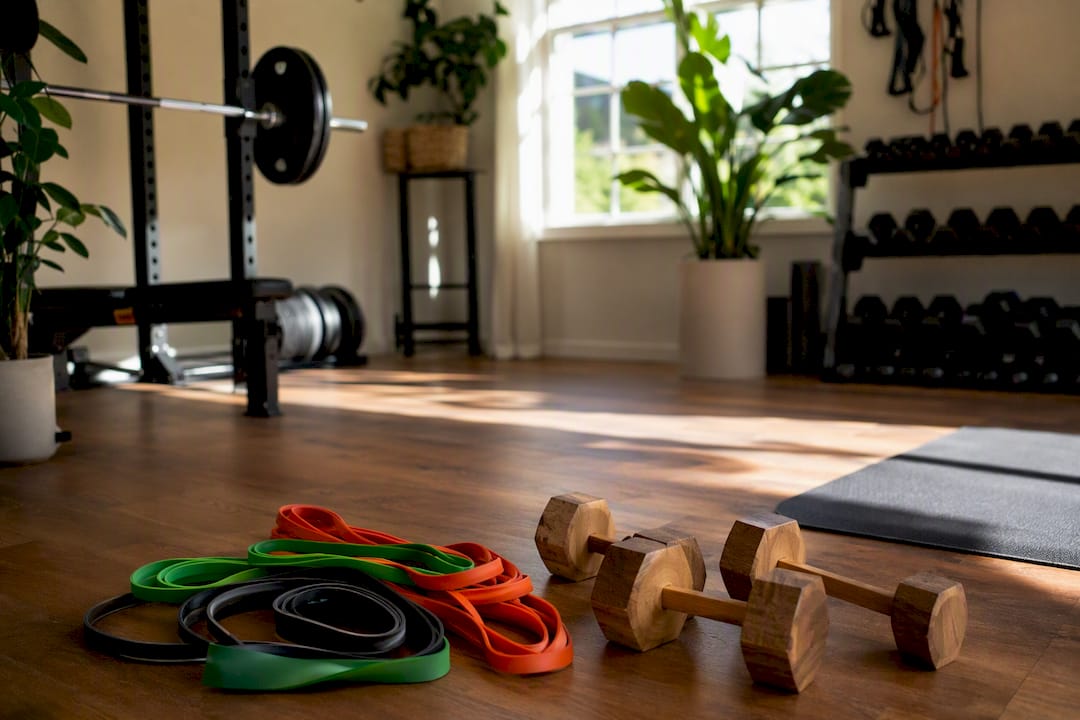
For women over 50 or anyone returning after a long break, the same principles apply with adjusted intensity: start sessions at RPE 5 to 6 rather than 7, extend warm-ups to eight or ten minutes, and prioritise controlled tempo over heavy loads for the first four to six weeks. Progression still happens, just on a gentler curve, and the bone and lean-mass benefits arrive regardless of how conservatively you start.
Nutrition and supplements that actually move the needle
Training builds the stimulus; nutrition builds the muscle. Protein is the single lever that matters most for women focused on hypertrophy or strength, and the target is specific enough to actually use: aim for roughly 0.7 to 1 gram of protein per pound of bodyweight per day. A woman at 150lbs is looking at somewhere between 105 and 150 grams daily, spread across three or four meals rather than crammed into one.
That same guidance notes something reassuring for anyone worried about balancing cardio and strength: moderate Zone 2 cardio sessions weekly do not interfere with muscle-building progress when protein intake and recovery are properly managed.
Practical ways to hit that target without obsessing over every gram:
- Anchor each main meal around a palm-sized portion of protein, chicken, fish, eggs, tofu, or legumes.
- Use a protein shake as a top-up on busy days, not a meal replacement strategy.
- Spread intake across the day rather than backloading it all at dinner, since muscle protein synthesis responds better to steady supply.
On supplements, keep the list short. Creatine monohydrate has decades of research behind it and is one of the few supplements with genuinely consistent evidence for improving strength and lean mass, including in women, at a standard maintenance dose of around 3 to 5 grams daily. Iron deserves a specific mention for menstruating women: heavy training combined with monthly blood loss can push iron stores low without obvious symptoms beyond fatigue. Get levels tested through a blood panel before adding an iron supplement rather than guessing.
Recovery, deloading and avoiding injury setbacks
Muscle doesn't grow during the workout, it grows during the repair afterwards, which makes recovery every bit as programmable as your training days. Skipping this step is the fastest route to a plateau or a nagging injury that derails months of consistency.
Every three to four training sessions weekly, plan a deload week roughly every four to eight weeks. This means cutting your training volume by around 40 to 50% while keeping the same intensity, fewer sets, same weight. It sounds counterproductive, but it lets accumulated fatigue clear without losing the strength adaptations you've already earned.
Warm-ups deserve more than a token five minutes on a treadmill. A useful structure runs:
- Two to three minutes of light cardio to raise core temperature.
- Dynamic mobility work targeting the joints you'll load that day, hips and ankles before squats, shoulders before presses.
- One or two light warm-up sets of the first main lift, building toward your working weight.
Pro Tip: Film your squat or deadlift from the side on your phone every few weeks. Form drifts slowly under fatigue, and a quick video catches issues, like knees collapsing inward, long before they become painful.
Persistent joint pain that doesn't ease within 48 to 72 hours, or any sharp pain during a lift, isn't something to train through. That's the point to see a physiotherapist or sports medicine professional rather than pushing on with the same programme.
How to plan progress over months, not just weeks
Random effort produces random results. A simple progression rule removes the guesswork and tells you exactly when to add weight, without needing a spreadsheet full of formulas.
The most usable version is the 2-for-2 rule: when you hit the top of your target rep range, at RPE 7 or below, for two consecutive sessions on a given exercise, add a small amount of load next time. Sensible jumps sit around 2.5 to 5% for upper-body lifts and 5 to 10% for lower-body lifts, since legs typically tolerate bigger jumps than shoulders and arms.
Structure that progression inside an 8 to 12 week mesocycle, a block of training with a consistent focus before you reassess. At the end of each block:
- Test a few key lifts to see how much strength you've actually gained.
- Adjust exercise selection if something has stalled for three or more sessions running.
- Take a deload week before starting the next block fresh.
On menstrual-cycle-informed training, keep expectations modest if you're newer to lifting. Cycle-aware adjustments have genuine value for advanced trainees chasing small margins, but for the first six to twelve months, consistency and recovery matter far more than timing sessions around cycle phases. Save that level of fine-tuning for once the basics are second nature.
How hormones shape the way women build strength
Testosterone drives a large part of the size difference between typical male and female muscle growth, and women naturally carry a fraction of the level men do. This is the physiological reason bulking fears don't hold up, and it also explains why women often respond brilliantly to strength work without the dramatic size changes that worry some beginners.
Oestrogen plays a more interesting role than most guides mention. It supports connective tissue health and has some protective effect on joints, but its fluctuation across the menstrual cycle can shift how ligaments and tendons feel from week to week, particularly around ovulation, when some women report feeling slightly less stable during heavy lower-body lifts. This isn't a reason to avoid training during any phase, just a reason to listen to how a session feels rather than forcing a number on the bar regardless of signals.
Menopause brings the sharpest hormonal shift relevant to lifting. Declining oestrogen accelerates bone density loss and changes fat distribution, which is precisely why resistance training becomes more valuable, not less, in perimenopause and beyond. The muscle and bone benefits of lifting don't just persist through this transition, they become one of the few tools that directly counteracts the changes menopause brings.
None of this means women need a fundamentally different training method to men. The core principles, compound lifts, progressive overload, adequate protein, apply identically. What changes is the context around them: expecting strength gains without dramatic size increases, and recognising that consistency across hormonal fluctuation matters more than perfect training every single week.
Common obstacles women face in the gym, and how to get past them
Confidence, not capability, stops more women from lifting heavier than any physical limitation does. Walking into a weights section that's mostly men, unsure which machine does what, is enough to send plenty of capable women straight back to the cardio machines they already understand.
The fix is almost always structural, not motivational. Following a written programme, rather than improvising each session, removes the need to figure things out on the spot in front of an audience. Knowing exactly what you're doing before you walk in changes the entire experience.
Time pressure is the second major barrier, particularly for women managing careers, caregiving, or both. A full-body session done properly in 45 minutes, three times a week, produces real results; the myth that effective training requires 90 minutes daily keeps plenty of busy women from starting at all.
Access to instruction is a genuine gap too. Many women have never been shown correct form for a deadlift or squat, and guessing from videos alone can build bad habits that are hard to unlearn later. This is where coached guidance, even a handful of sessions to establish technique, pays for itself many times over compared with months of self-taught mistakes.
Finally, comparison culture does real damage. Progress in strength training is intensely individual, shaped by training age, hormones, sleep and stress, so measuring your week against someone else's Instagram highlight reel is a losing game. Track your own numbers against your own history and the comparison problem mostly disappears.
The psychological shift that comes with getting stronger
Something changes beyond the mirror once you can deadlift your own bodyweight or add ten kilograms to a squat you started at empty bar. Physical strength has a way of translating into a broader sense of capability that shows up in places that have nothing to do with the gym.
Part of this comes from mastery itself. Strength training gives you a visible, numeric record of improvement, more weight, more reps, better form, in a way few other pursuits offer so directly. That feedback loop builds a kind of self-trust that's hard to manufacture through affirmations alone.
There's also a practical confidence that comes from knowing your body can handle physical demands: carrying heavy shopping, moving furniture, keeping up on a hike. That capability reduces a quiet, background anxiety many women carry about their own physical limits, often without realising it was there until it's gone.
Community adds another layer for many women. Training alongside others working toward similar goals, whether in a gym class or a coached programme, provides accountability that's hard to sustain solo, particularly through the weeks when motivation dips and results feel slow. The women who stick with strength training longest are rarely the most naturally motivated; they're the ones who built structure and support around the habit so it didn't depend on motivation at all.
What the research actually tells us about getting stronger
The evidence points somewhere quieter than most fitness content wants to admit: strength training doesn't need to be complicated to work. The studies showing meaningful pain reduction and strength gains used brief, low-intensity interventions, not gruelling six-day splits or exotic periodisation schemes. That's the opposite of what most programmes marketed to women imply.
Where conventional advice falls short is in overselling either extreme, the "light weights, high reps, don't get bulky" camp on one side, and the "no pain, no gain, train like an athlete" camp on the other. Neither reflects what the research supports: moderate, progressive, consistent loading, tracked over months, beats intensity spikes every time.
If there's one thing to prioritise above all else, it's adherence to a written plan with a clear progression rule. Motivation fluctuates weekly; a programme with defined sets, reps and a 2-for-2 rule for adding weight does not. That structural discipline matters more than any single exercise choice, supplement, or training split discussed above.
— prosper
A structured, coached path if you'd rather not build the plan alone
Everything in this guide works whether you follow it solo with a notebook or through a coached programme, but the honest difference is accountability and time saved figuring things out by trial and error. Fitprosperfitness specialises in science-backed training programmes and personalised coaching built around exactly the progression principles covered here, structured overload, sensible frequency, and nutrition guidance that doesn't require a nutrition degree to follow.
What makes the structured route worth considering is what you get alongside the programme itself. Clients get lifetime access to their training plans and actionable meal guides, plus monthly coaching accountability rather than a one-off plan left to gather dust after week three. That distinguishes it from generic templates: someone actually checks whether the plan is working and adjusts it when your progress stalls or your schedule changes.
Whether you're picking up a barbell for the first time or you've plateaued on a DIY routine for months, the structure and support are built for both starting points. If you want a programme built around your specific goals rather than adapting one written for someone else, visit Fitprosperfitness to see the current coaching options and get started.
Sources
For readers who want to go deeper, the systematic review on strength training and women's health covers the pain-reduction and strength data in full. The 2025 review on resistance training frequency breaks down volume and frequency evidence for hypertrophy. For nutrition specifics, see the protein guidance for women's health, and for general activity benchmarks, consult the CDC's adult physical activity guidelines.